Banning Social Media based on age: why that's a bad idea
A blanket ban on social media for children sounds appealing but it is not the right solution. Here we tell you why.

The UK government held an online consultation survey (which closed on 26th May) asking the public for their opinion on what they should do about social media harms to children. We filled it out and found it to be skewed and biased in favour of a blanket ban. And sure enough they announced on 15th June that they want to bring in the ban for January 2027. Here's our take on why that's a bad idea.
Why a ban is the wrong solution
Clearly social media is harmful for children. Just watch Molly vs The Machines or look at any of the content on our Parents page, and you'll see that.
Access to social media should be controlled by parents, not a blanket ban, however. The reasons are:
- Data leaking: Forcing every internet user to prove their age via Age Verification forces people to surrender sensitive ID info (ID docs, face scans, videos) to poorly secured third party companies. These companies provide the age verification service and they are regularly hacked. Examples of hacks include 5CA (used by Discord) and Persona, and examples of them over-collecting and leaking data are Yoti, Onfido and Jumio.
- Data brokers' dream: This vast trove of ID data is a honeypot for hackers. As soon as the ban comes into place hackers will step up their game, using AI, and will hack all the third party services. This then finds its way to data brokers - and we all end up feeding the surveillance beast. Here's a great recent example (May 2026) involving US military personnel.
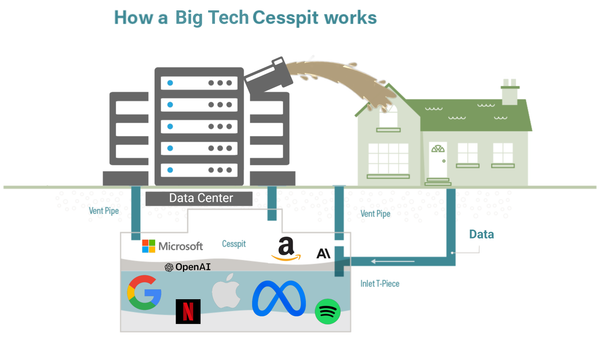
- Big Tech's dream: Meta have actively lobbied to have age verification laws introduced. They track people across the internet already, so if you have to age verify whereever you go, you are proving your true ID, and this is a goldmine for Meta (and other Big Tech surveillance companies such as Google, Microsoft, Apple etc). They can now link your true ID (as opposed to some random username) to your intenet activity. Perfect for swaying your behaviour via their giant targeted ads business. Age verification = ID verification.
- Gov surveillance: Do you trust your next government? Impossible to tell - so don't allow them to track all your online activity. They will triangulate the data with other sources. US citizens will already by acutely aware of this. This excellent blog post from Mullvad makes the point about state surveillance scope creep very well.
- Other surveillance knock-on effects: once your data is out there you cannot control what it is used for. You can be sure that it will affect all sorts of decisions that are based on algorithms though. E.g. insurance premiums and claims, online pricing. (We did a piece about surveillance pricing you might like to read.) There are darker effects for vulnerable groups like targeting of ethnic groups or individual people for stalking. We recommend the documentary Dangerous Apps to get a vivid and up to date picture of how that works.
- Pushes children to darker parts of the internet: they might try even creepier apps that are not yet obeying the age verification requirement. Here's Scotland's children's commissioner making this exact point (as well as saying the ban is a bad idea overall).
- It will be ineffective: reports from Australia show that most children are circumventing the social media ban there. Which means they are no safer, so people are being surveilled, and hackers celebrating, for nothing.
In the meantime, here's what you can do
- Sign this Open Rights Group petition to regulate Big Tech's business model, rather than social media users:
Petition to "Ban the business model not social media":
- Play the game differently:
Big Tech social media runs on the targeted ads model, so there's no healthy or ethical way to use it - find alternatives instead.
As the government decides what to do you can:
Learn together with your child using the resources on
and start better habits for yourself (and stop feeding the beast!) by starting our Big Tech Walkout programme:
Start Phase 1 of the Big Tech Walkout at the link here:
Rebel Tech Alliance is a non-profit dedicated to getting as many people off big tech products as possible. Why? Because that reduces the surveillance economy, and reducing that is good for individuals, society and democracy itself.